



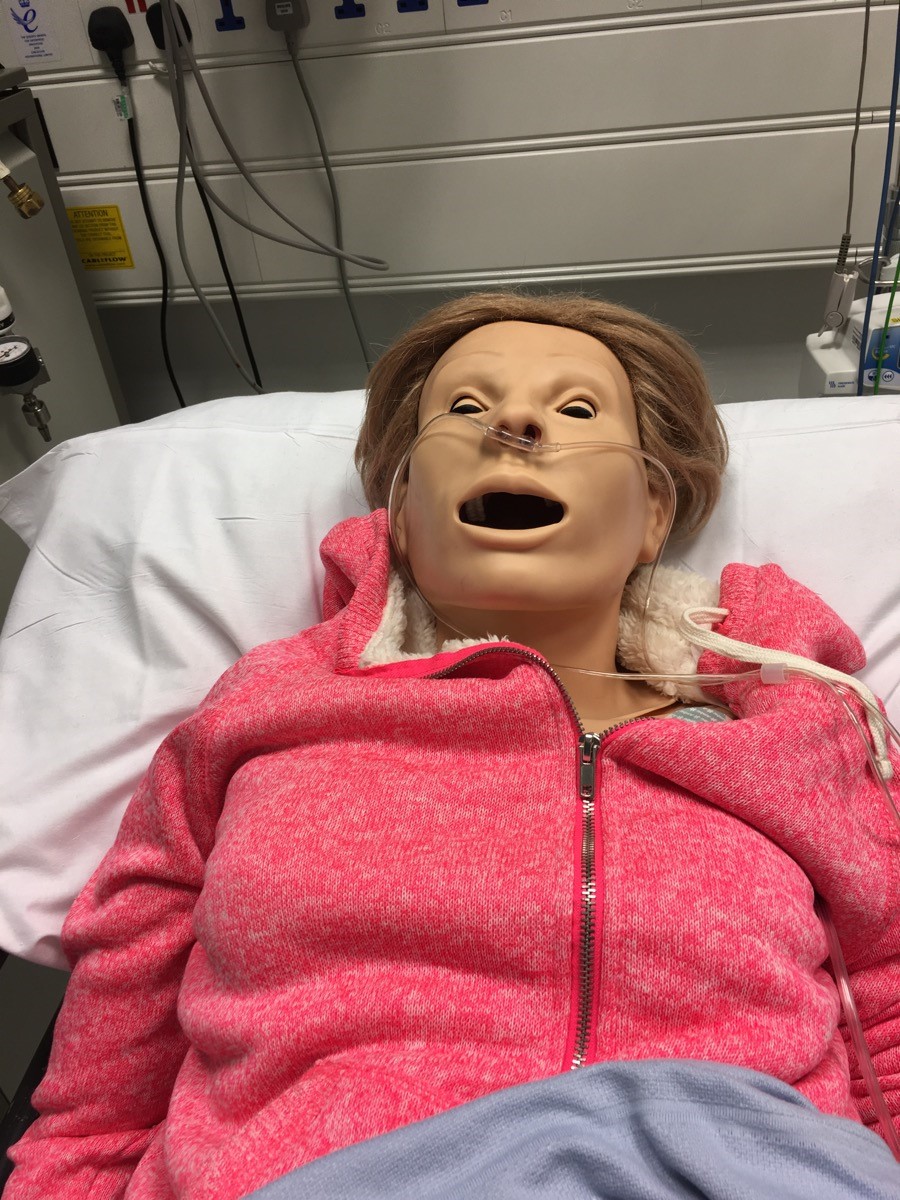
A two-day Faculty Development Workshop commissioned by Health Education England


Description
This highly interactive two-day workshop focusses on how to design impactful learning using simulation in the clinical environment. Drawing on cutting edge research in education, safety science, skill acquisition, and elite performance, the hands on programme develops strong evidence-informed skills and confidence for educators to include simulation in their teaching. The programme is designed for clinical teachers and is open to all health professionals.
Key Topics
- The Principles and Implementation of Simulation-based Teaching and Learning
- Scenario thinking and elite performance.
- How to harness the power of Observation , Feedback and Feedforward
- Effective Briefing, Debriefing and small group facilitation
- Patient simulators and simulated patients
- Educational Design and scenario writing
- Simulation & Systems Thinking for patient Safety
Benefits of Attending
- Master the fundamental theoretical and practical concepts of healthcare simulation.
- Craft and implement impactful lesson plans and case scenarios tailored to your clinical area.
- Delve into and refine various approaches to briefing and debriefing to enhance learning outcomes.
- Hone your small group facilitation skills with effective practice.
- Benefit from mentored practice and personalized written feedback in our follow-up faculty development program.
- Join our monthly Clinical Education Journal Club for engaged clinical educators.
- Receive an extensive Teacher Resource pack and design templates to elevate your teaching.
- Gain access to the GAPS simulator borrowing library and enjoy comprehensive logistical support for your in-situ teaching.
Who is it for?
The course will be relevant to anyone currently utilizing or intending to engage in simulation-based education. It is ideal for educators eager to broaden their range of teaching resources and refine their small group teaching skills.
This comprehensive course offers a diverse mix of theoretical and practical content, designed to elevate the expertise of novice, intermediate, and advanced simulation educators alike.
Our approach:
Our course thoughtfully integrates a variety of methods, including role-play, low and high-fidelity simulators, simulated patients (actors), and part task trainers, providing you with diverse settings that range from tabletop sessions to realistic clinical environments.
We genuinely aim to empower you with the confidence to creatively design and utilize a wide array of simulation resources in your clinical teaching practice.
As educators, we deeply believe that by equipping ourselves with a rich toolkit of strategies and resources, we become more adaptable to the needs of our learners, enhancing our ability to assess impacts and effectively explore clinical systems together.

The course is run over two days at the GAPS Simulation Centre at St George’s hospital.
Your Ongoing Professional development as a Simulation Trainer
Following each Trainer-the-Trainer course participants can opt to develop their skills and apply for the award of a Simulation Trainer Certificate.
To achieve this they need to show evidence of professional development in their use of clinical simulation following their initial training. Examples of what such a portfolio can include are:
- Reflective accounts of teaching practice
- Examples of educational design (e.g. clinical scenarios; course programs)
- Peer observations (at least two episodes of observing and giving written feedback on teaching practice and two written reports on your teaching practice from observers)
- Feedback from participants on teaching performance
- Evidence of a QI project using Scenario Based Learning
- Evidence of participation at a scientific conference in health education (e.g. poster or oral presentations)
We provide multiple opportunities to teach on our undergraduate and postgraduate programmes and to receive developmental feedback. We promote scholarship through our Monthly Journal Club meetings open to all.
Our Train-the-Trainer programme supports you to develop a Simulation Teacher portfolio. This collates evidence of your learning and development following the 2-day workshop.
Awards & Certificates
- Letter of recognition of attendance for 12 internal CPD points
- Certificate of Course Completion upon further attendance as faculty for a minimum of three separate simulation training courses with the GAPS centre (e.g. MEERKATS, Medical School Simulation, CAMhELS), during this you will be observed and receive feedback as part of our commitment to your ongoing professional development
- On further successful completion of the Faculty Development Portfolio, teachers will receive a GAPS Simulation Teaching Certificate Award and be invited to be part of our permanent Simulation Faculty
Fees
- Free of charge for NHS staff at St George’s Epson & St Helier University Hospitals and Health Group
- £390 for external NHS Staff
- £490 for non NHS staff
Course Dates:
Tuesday & Wednesday – 21st to 22nd October, 2025
Wednesday & Thursday – 12th to 13th November, 2025
Tuesday & Wednesday – 20th to 21st January, 2026
Wednesday & Thursday – 25th to 26th March, 2026
Booking Applications
Please fill in the application form below and email to simulation.admin@stgeorges.nhs.uk
Click here to see what people have said about the course.
Our approach:

The 2-day Train-the-Trainer program
We limit the number of participants, aiming to maintain a ratio of trainers to trainees of 1:3. Simulation scenarios are interspersed with facilitated workshops. These small group interactive sessions focus on the evidence base underlying key themes in education, human factors and clinical simulation.
A major focus of the training is to develop clinical teaching skills. Simulation scenarios provide the ‘backdrop’ for developing these skills in analysing practice. The context of practice will be both individual and team performances. The course is highly interactive and experienced educators give participants one-to-one feedback. We will also support and strengthen teaching skills with the aid of video and other tools.
Pre-Reading and Teaching Resources Pack
Participants will receive a teacher resource pack before attending. This presents a selected number of key educational topics which we hope will support your thinking and learning. Each topic presents a key thinker or theme with a synthesis of their contributions to current educational thinking and knowledge. A suggested reading list accompanies each topic for those who want to pursue further understanding. You can dip into topics as you please, as there is no particular sequence.

Educational Goals
At the end of the two-day intensive course attendees should be able to:
- Set up, program and operate a mobile patient simulator
- Apply concepts of instructional design to create effective simulation exercises.
- Use a variety of small group teaching strategies and techniques with simulation to enhance the learning environment for their trainees
- Apply educational principles of effective ‘feed up’ ‘feedback’ and ‘feed-forward’ in simulation training and relate these to the design and development of simulation scenarios
- Develop facilitation skills around technical and non-technical factors
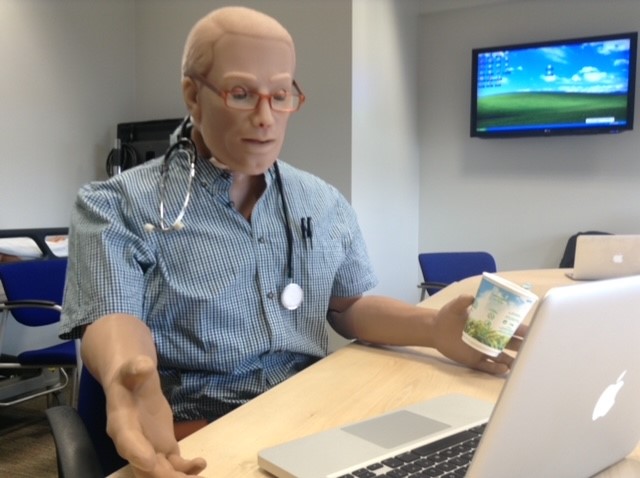
Advanced Train-the-Trainers Courses
St George’s Advanced Training the Trainer courses provide training for groups working in specific clinical areas. These courses can be delivered in the host area or hospital. We have considerable experience delivering these tailored programs both locally, nationally and internationally.
Such programs are usually co-designed & developed with the client group to meet their specific needs. In general, a site-specific needs analysis will first be done to study the work environment, ergonomics and clinical personnel involved in the program.
These programs can often be effectively used to probe local systems and to evaluate organisational processes. The core will be based around a two-day intensive series of workshops and small group teaching exercises, and the design of an evaluation strategy.

Key Words: simulation; simulation-based teaching; simulation based-learning. Scenario thinking; mental simulation; mobile simulation; high- fidelity simulation; simulated patients; feed up; feedback; feedforward; instructional design, briefing and debriefing, technical skills, non technical skills, learning; educational theory.

For further details/discussions, please contact:
Course Director: Huon.Snelgrove@stgeorges.nhs.uk
Simulation and Skills Specialists: Ylenia.DeFelici@stgeorges.nhs.uk and James.Godber@stgeorges.nhs.uk
Admin Team: Simulation.Admin@stgeorges.nhs.uk / tel. 0208 725 1119
 GAPS - Technology Enhanced Learning & Teaching
You must be logged in to post a comment.